Bundestagswahl
Federal elections
You elect the Bundestag, Germany’s national parliament. It passes federal laws and elects the chancellor.

Voting can feel unfamiliar the first time. Here’s what to expect, how to prepare and where to find help — at any election.
At the polling place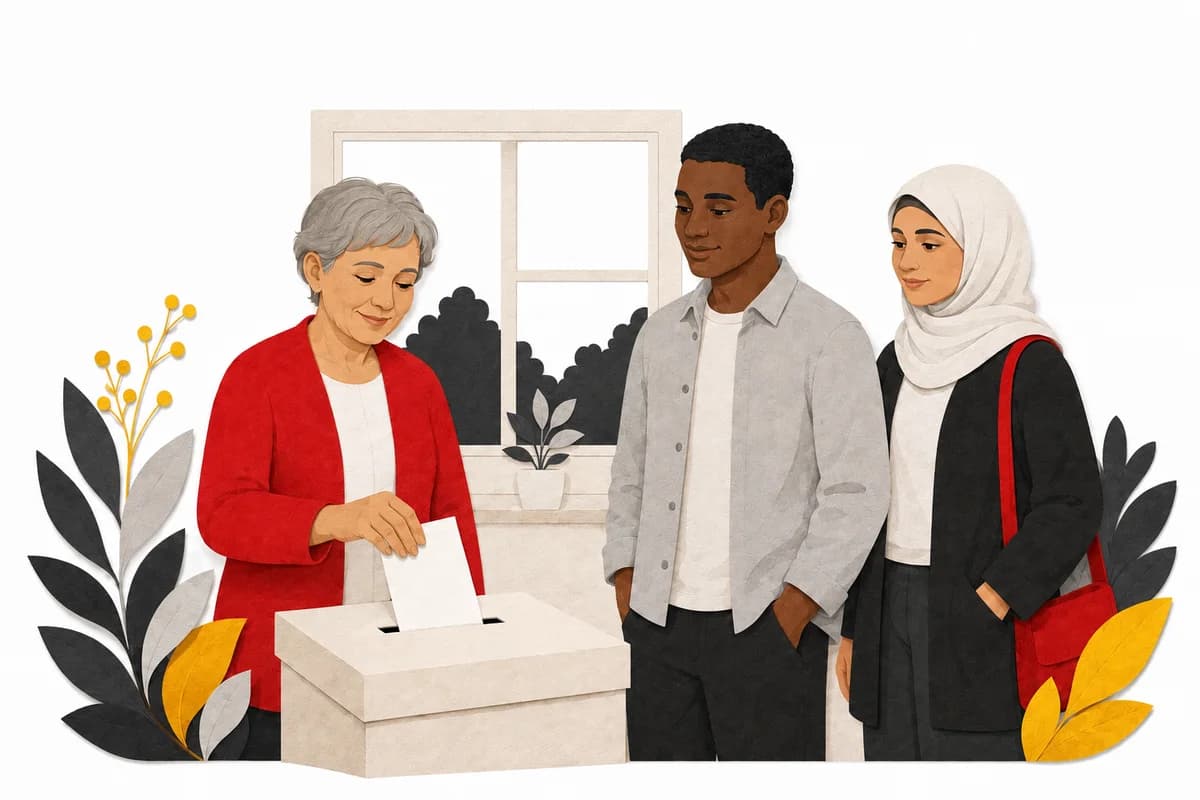
In an election, eligible voters choose who represents them. You decide for yourself, and your vote is secret. You do not need to be an expert to take part.
A little preparation makes election day easier. The election notification sent to you is a good place to start.
Your Wahlbenachrichtigung tells you when and where to vote. Check the assigned polling place and opening hours — the nearest polling place may not be yours.
Take your election notification and have your identity card or passport ready. At the polling place, the election team checks your details and gives you the ballot paper.
Read the instructions on your ballot: the number of votes can vary. Mark it in the voting booth, then fold it so your choices cannot be seen. Ask the election team if you need help with the process.
When the election team gives the go-ahead, place your folded ballot in the ballot box. Your part is done. Votes are counted after voting closes.

If you prefer to vote by post, request postal voting documents from your local election office. Your election notification explains how. Apply early so there is time to receive and return them.
Use the instructions on your notification or contact your local election office.
Complete the ballot in private. Sign the required declaration and use the envelopes exactly as described in your pack.
Send or deliver your election envelope to the address stated in the documents.
The envelope must reach the responsible office by the stated deadline. Posting it on election day is too late. Check the instructions for return options.
Germany has elections at several levels. Each chooses representatives for a different part of public life.
Bundestagswahl
You elect the Bundestag, Germany’s national parliament. It passes federal laws and elects the chancellor.
Landtagswahl
You elect your state parliament. State politics covers areas such as schools and policing. Names and voting rules vary between states.
Kommunalwahl
You choose local representatives, for example a town or city council. In some elections you also elect a mayor. These decisions shape everyday life in your community.
Europawahl
You elect members of the European Parliament. Together with the Council of the EU, it decides on laws that affect people across the European Union.
Not every ballot works the same way. Always check how many votes you have and how to mark them. Local and state election rules can differ.
Eligibility depends on the election, including age, citizenship and residence requirements. Do not assume the same rules apply to every election. Your local election office can confirm whether you are eligible and on the electoral register.
Contact your local election office promptly if it has not arrived, is lost or contains incorrect details. A missing notification does not automatically mean you cannot vote. The office can check your registration and tell you what to bring and where to go.
Usually you vote at the polling place assigned on your notification. A nearby building is not necessarily the correct one. If you need another location, ask the election office about a polling certificate (Wahlschein) and the options for that election.
Check your notification for accessibility information and contact the election office early about access or voting aids. If a disability or difficulty reading prevents you from completing the ballot yourself, assistance is available. The person helping must respect your choice and keep it secret.
Read party programmes and candidates’ statements, compare the issues that matter to you and check where information comes from. A comparison tool can help you explore positions. The final choice is always yours.